
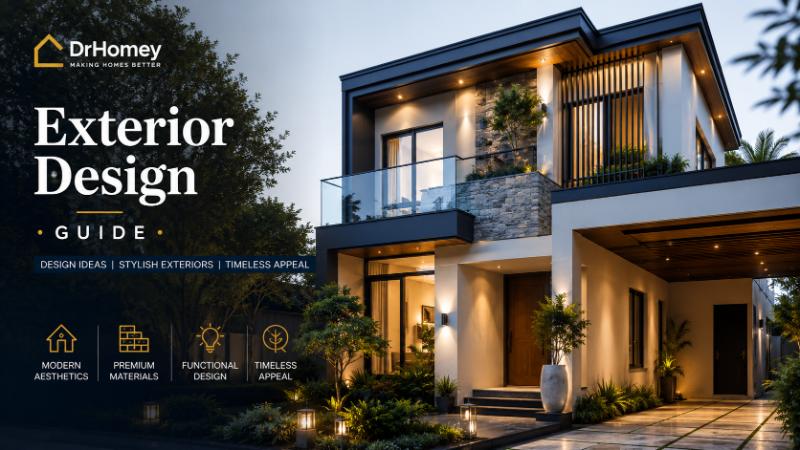

Exterior design is everything you can see from the street and the yard, plus the materials behind it. The main elements are:
- Roofing: the largest visual surface and your first line of defence against rain, sun and snow.
- Siding and facade: wood, fibre cement, vinyl, brick, stone, stucco or metal, each with its own look and upkeep.
- Windows and doors: the focal points of the front, and a big factor in heat loss and security.
- Paint and colour: the fastest way to change how a home feels.
- Landscaping: plants, lawns, trees, beds and hardscape that frame the building.
- Paths, driveway and patios: how you move around the property.
- Outdoor lighting: safety, security and mood after dark.
- Outdoor living spaces: decks, porches and seating areas.
A good design makes these pieces feel like they belong together, rather than looking like a collection of separate upgrades.
Why Exterior Design Matters
First impressions. Curb appeal shapes how people judge a home before they step inside. A tidy, well-proportioned front tends to make a property feel cared for.
Protection. Roofing, siding, gutters and drainage keep moisture out of the structure. Fixing these early is usually cheaper than repairing water damage later.
Comfort and running costs. Insulation, windows and shading can reduce how hard your heating and cooling have to work. The U.S. Department of Energy’s Energy Saver guide is a good neutral place to read about efficiency upgrades.
Resale appeal. A well-kept exterior can help a home stand out when it’s listed. How much value it adds depends on your local market, the condition of the rest of the house and what comparable homes offer, so be wary of any promise of a fixed return.
Plan the Project in the Right Order
A common mistake is starting with colours and plants and only later discovering the roof is failing. This order saves money:
- Inspect the structure first. Look at the roof, gutters, drainage, foundation edges, and any rotten wood. Fix problems before decorating over them.
- Set a budget with a buffer. Leave room for surprises, since hidden damage is common once old siding or decking comes off.
- Choose materials that suit your climate. Heavy rain, strong sun, snow, humidity and salt air each favour different products.
- Pick a simple colour palette. Two or three tones (a main colour, a trim colour and an accent) usually look more polished than many competing shades.
- Do the heavy work before the finishing touches. Roof, siding, windows and drainage come before painting, planting and lighting.
- Check rules and permits. Many places require permits for structural work, fences or large changes, and some neighbourhoods have association guidelines on colours and materials.
Choosing Materials: What to Think About
There’s no single best material. Compare options on these points:
- Upkeep: Wood looks warm but needs regular sealing or painting. Fibre cement, brick and metal generally ask for less.
- Durability in your climate: A product that does well in a dry region may struggle in a wet or freezing one.
- Cost over time: The cheapest option up front can cost more if it needs replacing or repainting sooner.
- Insulation and efficiency: Some systems pair better with added insulation. Light-coloured or reflective roofing can help in hot areas, and ENERGY STAR lists certified products if you want to compare efficiency.
- Style fit: Match the material to the home’s architecture. A modern slab of cladding can look out of place on a traditional cottage, and vice versa.
Ask suppliers for samples and look at them outdoors in daylight, because colours change a lot between a showroom and your own street.
Landscaping That Supports the Design
Plants and hardscape do a lot of the visual work in a good exterior.
- Layer by height. Put taller plants behind or beside lower ones so the house feels framed, not hidden.
- Choose plants for your conditions. Native or climate-suited plants usually need less water and fewer replacements.
- Keep trees away from the structure. Roots and falling branches can damage foundations, roofs, and gutters.
- Use shade on purpose. Well-placed trees or pergolas can cool the sunniest sides of the house in summer.
- Think about drainage. Slope soil away from the walls so water doesn’t collect against the foundation.
Lighting for Safety and Style
Outdoor lighting is easy to overlook until you need it. Light the entrance, steps, and walkways first, since those are about safety. Then add accent lights to highlight architectural features or planting. Warm-toned, shielded fixtures give a softer look and reduce glare, and LED or solar options keep running costs down. Motion sensors are a practical choice for side gates and dark corners.
Paths, Driveways and Outdoor Living Areas
A clear, comfortable route from the street to the front door makes a home feel welcoming. Make paths wide enough for two people, use non-slip surfaces and avoid awkward steps. A patio, porch or deck works best when it connects naturally to the house and gets the right mix of sun and shade for how you plan to use it.
Common Mistakes to Avoid
- Spending on cosmetics while the roof or drainage needs repair
- Choosing colours from a small paint chip without testing a larger patch on the wall
- Mixing too many materials and styles on one facade
- Ignoring maintenance, so a beautiful finish deteriorates quickly
- Overbuilding for the neighbourhood, so the home no longer matches its surroundings
- Skipping permits or association rules and being forced to redo the work
Where Exterior Design Is Heading
Trends change, but several directions are steady: smarter lighting and irrigation controls, sustainable and recycled materials, drought-friendly planting, and better-insulated envelopes. If a trend is appealing, check that it fits your climate and budget before committing, and treat new technology as optional rather than essential.